
Fix Low YouTube Views by Finding Growth Signals
Low views can feel personal—like YouTube stopped listening. But most of the time, the issue isn’t “your channel is doomed.” It’s that something changed in the path from impression → click → watch → recommendation.
Start with My Videos — Learn What Actually Works to stop guessing and use your own video data to find strong growth signals.
Low views usually means one stage of the funnel is failing: impression, click, watch, or recommendation.
Use growth signals from your own video data to see which patterns YouTube can expand.
This pillar page shows creators how to stop guessing and instead use their own video data to find strong growth signals.
My Videos — Learn What Actually Works (Even When Views Are Low)
Low views can feel personal—like YouTube stopped listening. But most of the time, the issue isn’t “your channel is doomed.” It’s that something changed in the path from impression → click → watch → recommendation.
This pillar page shows creators how to stop guessing and instead use their own video data to find strong growth signals—the patterns that explain why certain videos performed and how to repeat that success.
If you’re a creator struggling with low views, frustrated with the silence, and ready to identify what’s actually working, start here.
Use your data to map what’s breaking in the funnel—then act on the stage that needs attention.
Key idea: Rank past videos by growth signal potential, not just total views.
Why Your YouTube Views Dropped (And What It Usually Means)
When views suddenly drop, it’s rarely one thing. It’s usually one (or more) of these bottlenecks:
1) Your videos aren’t getting impressions (visibility problem)
- Impressions dropped in Suggested Videos, Home, or Search
- Your video isn’t matching what viewers currently want
- The topic is losing momentum (“new” demand moved elsewhere)
2) Your packaging isn’t converting (click problem)
- CTR (click-through rate) is low despite impressions
- Thumbnails/titles aren’t communicating enough value
- Your promise doesn’t match the video’s reality (mismatch hurts retention too)
3) Your audience isn’t staying (retention problem)
- Early drop-off in the first seconds/minutes
- Average view duration (AVD) isn’t strong relative to view length
- Viewer satisfaction signals weaken (watch behavior + session impact)
4) You’re getting clicks—but not earning recommendations (growth signal problem)
- You can have decent clicks but weak watch metrics
- Your traffic source mix isn’t improving over time
- Videos don’t “graduate” from early audiences into broader recommendations
Key takeaway: “Low views” usually means one stage of the funnel is failing. Your job is to identify which stage—then act on it.
The Creator Tips Framework: Find Your Video’s Growth Signals
Instead of asking “How do I get more views?”, ask:
Which videos show evidence that YouTube can expand this audience?
Use these growth signals to rank your past videos by potential, not just total views.
CTR is improving (or is unusually strong)
- Look for videos where CTR is solid for the impressions you received, or CTR is trending upward after publishing
- What it means: packaging + title promise are working.
Impressions are rising over time
- Even if views are modest, rising impressions indicate YouTube is testing the video with more viewers
- What it means: the topic/format is still relevant enough to earn distribution.
Strong retention in the first 30–60 seconds
- A pattern of lower early drop-off is one of the clearest “repeat this” indicators
- What it means: your hook and opening structure match the viewer’s expectation.
Higher-than-average watch time for your niche
- Compare to your channel’s baseline and similar-length videos
- What it means: the content delivers what viewers came for.
Traffic source mix is shifting toward Search/Suggested
- A video that starts earning Search (or gains share in Suggested) often has long-term compounding potential
- What it means: YouTube can connect the video to ongoing intent.
Viewer actions signal interest
- More engagement per impression, and videos that spark discussion can outperform later
- What it means: viewers feel “this is for me.”

Which Videos You Should Double Down On (A Simple Segmentation)
When views are low, it’s tempting to keep chasing new ideas. Instead, sort your catalog into 4 buckets and act differently on each.
Bucket A: High signal = double down now
Videos with good CTR + decent retention (even if not huge views).
Action: reuse title angles, structure, and topic framing.
Bucket B: Clickable but weak retention = fix the first draft
Videos with decent CTR but viewers leave early.
Action: strengthen hook, tighten pacing, clarify the value fast.
Bucket C: Retention is okay but discovery is weak = optimize discovery
Videos with solid watch but low impressions.
Action: improve YouTube SEO, keyword targeting, and packaging for search intent.
Bucket D: No signal = stop repeating that pattern
Videos with consistently weak performance across multiple metrics.
Action: don’t “more of the same.” Extract only what worked (a topic detail, a format element, a segment style).
Step-by-Step: Audit Your Channel Like a Research Tool
You don’t need to analyze everything. You need a consistent approach.
Step 1) Pick a baseline window
- Compare: Your last 5–20 uploads
- Similar video lengths
- Similar topics/format types
Step 2) Label the bottleneck
- Low impressions → discovery
- Low CTR → packaging
- Low retention → content delivery/hook/pacing
Step 3) Identify the “growth curve”
A video that starts small and improves can be a stronger indicator than a high-view spike that never sustains.
Step 4) Extract reusable patterns
- Topic framing
- Title style (promise format)
- Thumbnail composition
- Video structure (sections, pacing, length)
- Keyword themes (what viewers/YouTube connects you to)
Step 5) Turn patterns into a next-3-video plan
Don’t bet on one upload. Plan 3 videos with: The same winning promise, Different angles under the same audience intent, One deliberate test (thumbnail or opening hook)
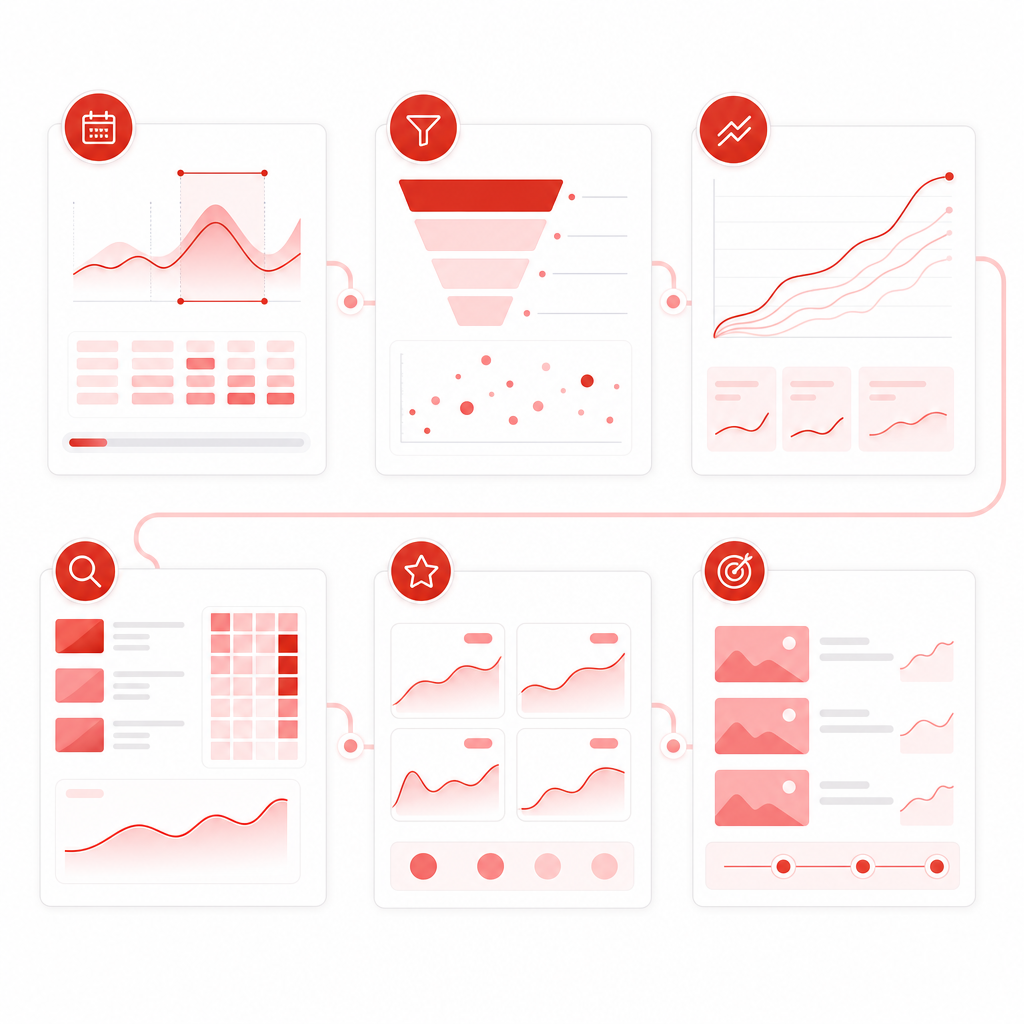
YouTube SEO: Use Your Best Performing Keywords (Not Guesswork)
This is where YouTube SEO turns into a system.
When views are low, creators often target random keywords. Instead:
- Look at what your videos already earned traffic from
- Expand keywords where you have proven audience fit
- Build titles/thumbnails that match that intent
How to think like a keyword explorer
Use your data to answer:
- Which phrases relate to the topic of your winners?
- Which queries seem to “align” even if the video didn’t fully convert?
- Are your titles competing for the same intent as higher-performing videos in your niche?
That’s exactly the mindset behind Keyword Explorer: find the keywords/topics your audience is already searching for and connect them to what your channel can earn.
How Small Channels Should Measure Progress (What Actually Matters)
If you’re a smaller creator, comparing your views to big channels will burn you out.
Instead, focus on leading indicators:
- CTR quality
- early retention
- impression trends
- traffic source movement (Search/Suggested share)
- velocity of learning (does each upload get easier to optimize?)
Creator truth: small channels win by finding signal fast and compounding it.
Common Mistakes Creators Make When Views Are Low
- Over-editing titles after publishing instead of improving the underlying promise/intro
- Chasing trending topics that don’t match your channel’s audience fit
- Ignoring retention because views look low (clicks without watchtime won’t scale)
- Comparing with viral channels instead of your own baseline
- Not organizing your past wins into repeatable patterns
Instead of repeating patterns that don’t create signal, use the framework to identify what’s actually working—then plan your next uploads with intent.
Start with My Videos to see growth signals across CTR, retention, and discovery.

GapTube.ai: See What’s Working on Your Channel (And Repeat It)
GapTube.ai – YT Research Tool helps creators master YouTube strategies, discover trending content opportunities, and automate research.
With My Videos — Learn What Actually Works, GapTube.ai analyzes your own channel performance to uncover what’s driving:
- clicks (CTR)
- retention
- views and growth signals
- topic and packaging patterns
- keyword opportunities
So you stop guessing what to post next—and start using evidence from your best performers.
What you get with My Videos
- Identify the videos with the strongest growth signals
- Learn which topics, titles, formats, thumbnails, and keywords match your audience
- Turn past performance into a clearer plan for your next uploads
- Stay ahead with trend scanning and content gaps in 70+ languages
Don’t miss out—start turning your past uploads into your next wins.
Ready to Stop Guessing? Start With Your Best Signal
If you’re tired of posting and watching views stay stuck, your solution isn’t “try harder.” It’s:
- find what’s actually working in your data
- isolate the growth signals
- repeat the winning patterns with intent
Run your My Videos analysis and learn what to double down on next.
Frequently Asked Questions
How do I know if low views are a CTR problem or a retention problem?
Check whether impressions are happening first.
Low impressions = discovery/SEO/targeting
Low CTR (with decent impressions) = thumbnail/title packaging
Low retention = content delivery/hook/pacing
Can my old videos start growing again?
Yes—especially when YouTube finds new search intent or suggested audiences. Videos can also re-earn impressions when the title/keyword relevance aligns better than before.
What should I focus on as a small channel?
Leading indicators: CTR quality, early retention, impression trends, and traffic source movement. These predict whether a video can scale.
Does this replace YouTube SEO tools like Keyword Explorer?
It complements them. GapTube.ai helps you see what works on your channel, while keyword exploration helps you target the right intent to earn more consistent discovery.
Next Step
Start with My Videos — Learn What Actually Works and uncover your channel’s winning patterns—so your next upload has signal from day one.
Use your own video data to find growth signals—then repeat the winning patterns with intent.