
Analyze Your YouTube Analytics to Know What to Post Next
If you’re a creator and you’re stuck on “What should I post next?”, you’re not alone. Most YouTubers don’t need more motivation—they need clarity.
Your audience already told you what works. The problem is that it’s buried across performance signals like clicks, watch time, retention, and growth trends—spread out over multiple screens.
GapTube.ai ( My Videos — Learn What Actually Works ) helps you run YouTube Analysis on your own channel to uncover the real patterns driving:
- Clicks (what gets people to click your titles/thumbnails)
- Retention (what keeps them watching)
- Growth (what earns momentum over time)
- Topics, formats, and keywords that match what your viewers enjoy
Result: You’ll know what to repeat, what to fix, and what new video ideas to create next—based on evidence, not guesswork.
What Creators Really Need (Not More Ideas—Better Signals)
When you’re creating content regularly, “more ideas” often becomes “more randomness.”
A smarter approach is to answer these questions with data:
- Which videos earned attention first? (CTR and click signals)
- Which videos held attention longest? (retention and watch time)
- Which topics keep bringing new viewers? (growth patterns)
- Which packaging and format worked together? (title + thumbnail + video type)
- Which keywords are already winning for you? (search/promptable discovery signals)
That’s exactly what this pillar page is about: YouTube videos + YouTube Analysis to turn past performance into your next publishing plan.
Why “YouTube Analytics” Beat Guessing Every Time
You can learn a lot by studying other channels—but the fastest path is usually your own evidence.
Why?
- Because your channel has:
- a distinct audience,
- a particular content style,
- repeating viewer expectations,
- and a history of what your viewers have already rewarded.
So instead of copying what might work elsewhere, you start by finding what already works for you—then scale it.
The Data Trail Your Audience Leaves Behind
When viewers interact with your videos, they leave a trail of signals. Use them to answer:
- What did viewers click? → Your title + thumbnail strength
- What did viewers stay for? → Your content structure + hook + pacing
- What did YouTube keep recommending? → Relevancy to search/browse and audience match
This is the core shift: From “I hope this will perform” to “I know what my audience already enjoyed—and I’ll build on that.”
Section 1: The “Skill Test” for Creators Who Don’t Know What to Post Next
Here’s a quick self-check you can run before you even open any tool. Think of it like a Skill Test for content decisions.
- Can you name 3 videos on your channel that performed best for views AND retention?
- Do you know whether your best videos were driven more by clicks (packaging) or by watch time (content)?
- Do your best videos share a clear topic, format, or promise?
- Have you repeated that promise in the last 2–3 uploads?
- If you’re “consistent,” do your viewers still have a reason to watch—based on your most recent performance?
don’t worry. That’s exactly why My Videos — Learn What Actually Works exists.
Section 2: How to Use YouTube Analysis to Find Your Winning Patterns
To know what to post next, you need to detect patterns in your own:
- titles,
- thumbnails,
- formats,
- topics,
- keywords,
- and performance over time.
2.1 Start with your top performers (but don’t stop at views)
A video with high views is useful—but the real indicator is often:
- Did it hold attention?
- Did it create momentum?
- Did it match an audience pattern you can repeat?
2.2 Compare “clicked” vs “watched”
Your channel likely has videos that:
- got clicks but didn’t retain (packaging worked, content didn’t land as expected)
- retained well but didn’t get enough clicks (content strong, packaging needs work)
- did both and created growth (repeat this combination)
2.3 Look for topic and keyword repetition
Your audience isn’t only reacting to video quality—they’re reacting to relevance.
So identify:
- topics your audience already searches for or binge-selects,
- keyword themes your videos naturally rank or recommend around,
- and common phrasing across your best titles.
2.4 Identify content format winners
Some channels win with:
- tutorials,
- breakdowns,
- reviews,
- storytelling,
- experiments,
- challenge-style content,
- or “explainer + example” structures.
Don’t assume. Prove it by comparing performance by format.
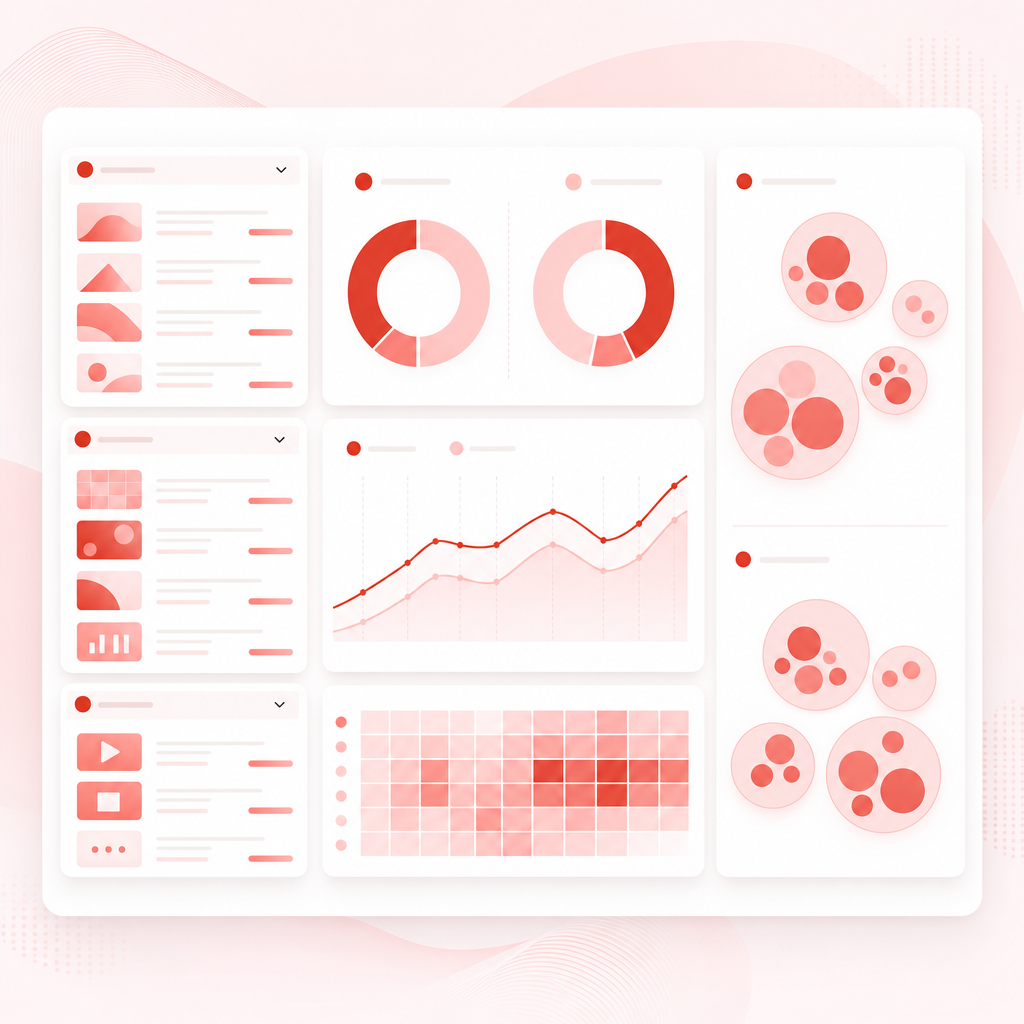
Section 3: How GapTube.ai Finds What’s Working (Your “My Videos” Workflow)
With GapTube.ai (gaptube.ai), you don’t just look at analytics—you translate your YouTube videos into actionable next steps.
- Scans your existing channel performance signals
- Identifies content gaps and winning patterns in your niche
- Turns past performance into clear video opportunities
- Helps you plan better videos faster (so you’re not stuck brainstorming forever)
GapTube.ai also scans trends worldwide and helps you:
- discover trending content opportunities,
- spot content gaps in your niche,
- and generate video ideas with actionable direction.
Best part: ideas support creators in over 70 languages, so your planning can align with global demand—not just your local audience.
Section 4: Double Down on What Your Audience Already Loves
Once you find your winning patterns, the goal isn’t to “make random similar videos.”
Instead, repeat with intent.
- Repeat the winning promise (what the viewer gets)
- Upgrade the packaging (better title/thumbnail clarity)
- Improve the structure (faster hook, clearer payoff, stronger pacing)
- Refine the keyword angle (make the topic easier to find and recommend)
- Test a variation (one variable at a time)
That’s how you turn past success into future growth.
Section 5: Benchmarking—When It Helps to Look at Other Channels
Studying other channels can be useful—especially when you want inspiration or to understand broader trends.
But do it strategically:
- Use other channels to spot emerging formats and angles
- Then bring it back to your own channel data:
“Would my audience respond to this promise?”
“Does this format match what my best videos already do well?”
Think of it as: Other channels show possibilities. Your YouTube Analysis confirms what’s actually a fit.
Section 6: 10 Growth Behaviors You Can Actually Validate with Your Data
Many growth tips are generic. The difference is whether you can validate them using your own YouTube performance.
Here are “growth behaviors” you should be able to confirm through analysis:
- Packaging clarity: clearer title + thumbnail = more clicks
- Consistent promise: viewers understand the value immediately
- Retention-first structure: your hook earns the first seconds
- Format consistency: the content type matches viewer expectations
- Topic clustering: you build momentum around related themes
- Keyword alignment: your videos match what people search/browse for
- Better pacing: viewers don’t drop before the payoff
- Stronger differentiation: you add a unique angle, not a copy
- Repeatable series: create “part 2” naturally from what worked
- Data-driven iteration: improve one factor at a time
GapTube.ai helps you move from “I think” to “I can see why.”
Section 7: Example—What “Winning Patterns” Look Like
Here are common patterns creators discover after running YouTube Analysis on their own videos:
Pattern A (Click-led growth):
Titles that use specific outcomes (e.g., “in X days,” “for beginners,” “with examples”) earn better clicks. Next step: keep the outcome promise, change the topic and keep the structure.
Pattern B (Retention-led growth):
Your best videos include a quick demo or example early, then deeper explanation later. Next step: build a new topic using the same early “proof” sequence.
Pattern C (Format-led growth):
Your breakdowns or experiments outperform your general commentary. Next step: create a series using the same format and adjust the level of depth.
The key: your “next video” should be derived from what your channel has already proven.
Section 8: What to Post Next—A Simple Planning Process (Using Your Past Data)
Use this workflow every time you feel stuck:
- Step 1: Pick 1–3 past videos to study Choose videos that performed well and match the vibe you want to keep building.
- Step 2: Identify the winning factor Ask: Was it stronger clicks or stronger retention? What’s the promise of the video? What structure did it use? What keywords/topics were most consistent?
- Step 3: Create 5 next-video angles from the pattern For each pattern, generate:
- 1 continuation,
- 1 “beginner version,”
- 1 advanced version,
- 1 “mistakes + fixes” version,
- 1 “experiment/iteration” version.
- Step 4: Improve packaging and positioning Update: title clarity, thumbnail readability, and keyword focus so the right audience can find you faster.
- Step 5: Publish with an iteration plan Don’t just post—plan what you’ll adjust based on the next results.
Who This Is For
My Videos — Learn What Actually Works is built for:
- YouTubers who feel stuck after a few good uploads
- Creators who want to stop guessing and start repeating winning patterns
- Channels that want clearer decisions about topics, titles, thumbnails, and formats
- Anyone who wants faster content planning using their own YouTube videos
If you’re a creator who wants clarity on future video ideas by analyzing what your audience already clicked, watched, and enjoyed—this is for you.
Ready to stop guessing and start using your data to plan better videos?
Don’t miss out.
Frequently Asked Questions
What is “My Videos — Learn What Actually Works”?
Do I need to understand YouTube analytics to use it?
Will it help with deciding topics, titles, thumbnails, and keywords?
Can I use it even if I’m a small channel?
Your Audience Already Knows What to Post Next
You don’t need better guesses. You need better answers.
Stop guessing what to post next. Use your own video data to find winning patterns, double down on what your audience already loves, and turn past performance into better future videos—with GapTube.ai (My Videos — Learn What Actually Works).
Start Your “My Videos” YouTube Analysis Today
Turn your past performance into your next publishing plan.
Try GapTube.ai — My Videos — Learn What Actually Works and discover:
- what’s driving clicks,
- what’s driving retention,
- which themes and keywords are working,
- and what to post next with confidence.
Turn your past performance into your next publishing plan.